While raspberries, strawberries, and other berries remain high-value ingredients, their supply volatility means relying solely on them can be risky. Climate events, weather disruptions, and yield drops have pushed prices up significantly — particularly for raspberries in Europe and other traditional supply regions.
Richfield Food’s smart strategy has been diversification. By operating a dedicated tropical-fruit processing base in Vietnam, Richfield taps into year-round harvests of mango, pineapple, banana, dragon fruit, and other tropical produce — enabling steady supply of freeze-dried fruit that doesn’t depend on temperate-zone stability.
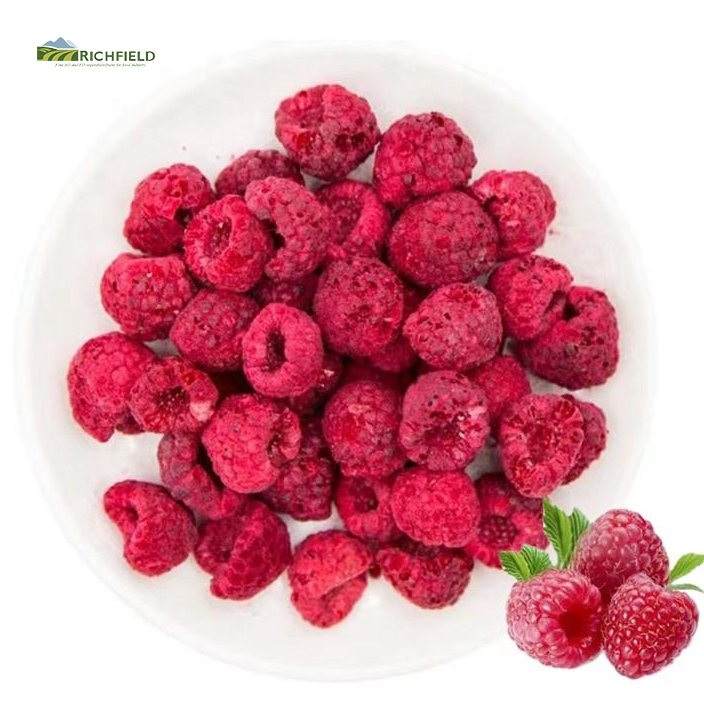
This diversification allows customers to:
Combine berries and tropical fruits for product variety (e.g., mixed berry–mango cereals, fruit-medley snacks);
Hedge against berry scarcity by shifting product formulations toward tropical-fruit blends;
Offer seasonal or regional fruit flavors without being constrained by berry harvest cycles.
Market data supports this approach. The global freeze-dried fruit industry continues to expand across fruit types, not only berries. Many new product launches in 2023–2025 include tropical fruit-based snacks and mixes, reflecting consumer demand for exotic flavors and variety.
For buyers, Richfield’s dual-region model and capacity make it easier to stay ahead of market shifts. When traditional berry supply tightens — as happened in 2025 — tropical fruit from Vietnam can fill the gap, ensuring consistent supply and cost control.
In short: Richfield’s tropical freeze-dried fruit doesn’t compete with berry-based ingredients — it complements them. That gives buyers flexibility, product variety, and resilience in a volatile global fruit landscape.
Post time: Dec-22-2025